How economic changes affect SMEs is an important question for every small and medium-sized business owner. Rising prices, changing interest rates, weaker customer demand, supply-chain disruptions, and new government policies can directly influence operating costs, cash flow, profitability, and expansion plans.
SMEs often work with limited financial reserves and tighter profit margins, which can make sudden economic changes difficult to manage. However, their smaller size can also help them respond faster, adjust their strategies, and explore new opportunities.
Economic uncertainty does not always mean business decline. With proper planning, cost control, financial discipline, and an understanding of market trends, SMEs can manage risks and continue growing sustainably.
This guide explains how economic changes affect SMEs, the major challenges businesses may face, the opportunities that can emerge, and practical strategies for long-term growth.
What Do Economic Changes Mean for SMEs?
Economic changes include movements in inflation, interest rates, consumer spending, currency values, taxation, employment, government policy, and trade.
These factors can influence:
-
Operating costs
-
Customer demand and pricing
-
Loan affordability
-
Inventory and suppliers
-
Hiring and expansion
The effect differs across businesses. Rising import costs may hurt one manufacturer while benefiting a local supplier. Owners should therefore study effects on their own customers, suppliers, cash flow, and financing.
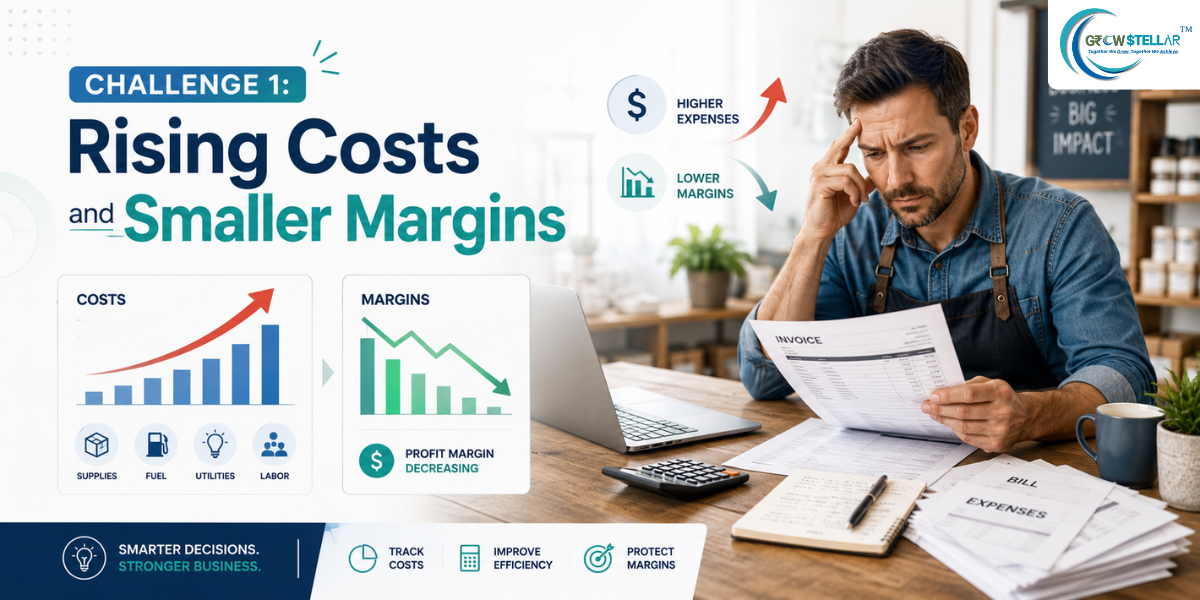
Challenge 1: Rising Costs and Smaller Margins
Inflation is the rate at which the general price of goods and services rises over time. For an SME, it may appear through higher costs for materials, fuel, rent, packaging, transport, salaries, and utilities.
The difficult question is whether to absorb these costs or pass them on to customers. Increasing prices too quickly may reduce demand, while keeping them unchanged can weaken margins.
Businesses can respond by:
-
Reviewing margins for each product or service
-
Renegotiating supplier prices and payment terms
-
Reducing waste and unnecessary expenses
-
Offering different package sizes or service levels
-
Introducing price changes gradually
Cost reduction should not damage the quality or service customers value. The goal is to remove inefficiency, not weaken the product.

Challenge 2: Costlier Access to Finance
Central banks use tools such as interest rates to influence inflation and economic activity. Changes in rates can affect borrowing costs, although the impact varies by lender and loan product.
For SMEs, higher borrowing costs can increase EMIs, make expansion less affordable, and pressure working capital. Access to suitable finance is already a major challenge for many smaller firms in emerging markets.
Before borrowing, businesses should:
-
Calculate total repayment, not only the advertised rate
-
Match the loan tenure with its purpose
-
Understand whether the rate is fixed or floating
-
Avoid borrowing repeatedly to cover operating losses
-
Check whether expected cash flow can support the EMI
Debt can support growth when it funds a productive need. It becomes risky without a realistic repayment plan.

Challenge 3: Changing Customer Demand
During uncertain periods, customers may delay purchases, negotiate harder, switch to cheaper options, or focus on essential products.
A business depending on one product, location, or a few large customers may be especially vulnerable.
SMEs should:
-
Track changes in order size and frequency
-
Speak with important customers
-
Offer flexible packages without unsustainable discounts
-
Test products for new customer segments
-
Avoid producing inventory based only on past demand
A fall in demand is easier to manage before inventory and expenses have already increased.
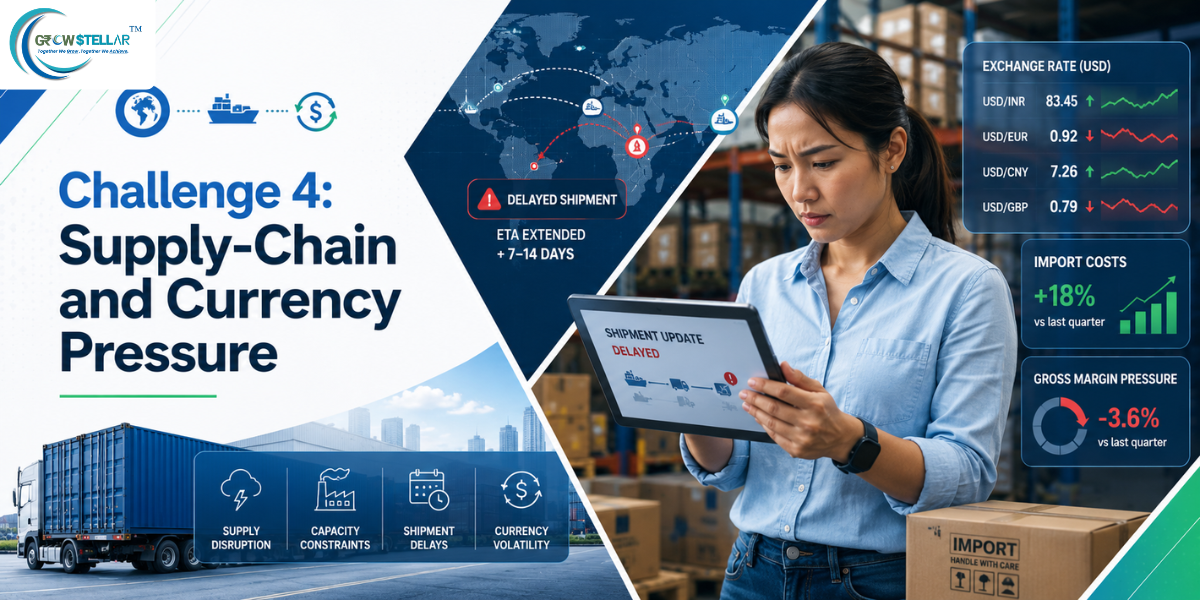
Challenge 4: Supply-Chain and Currency Pressure
Global disruptions can delay materials, raise freight costs, or create shortages. Currency movements can also affect businesses that import products, machinery, software, or components.
Depending on one supplier may feel convenient during stable periods but becomes risky when that supplier cannot deliver.
Businesses can improve resilience by:
-
Identifying alternative local and regional suppliers
-
Reducing dependence on one vendor
-
Keeping suitable safety stock for critical items
-
Reviewing contracts for price and delivery risks
-
Informing customers early about possible delays
Too much inventory can block working capital, so supply security must be balanced with storage and financing costs.
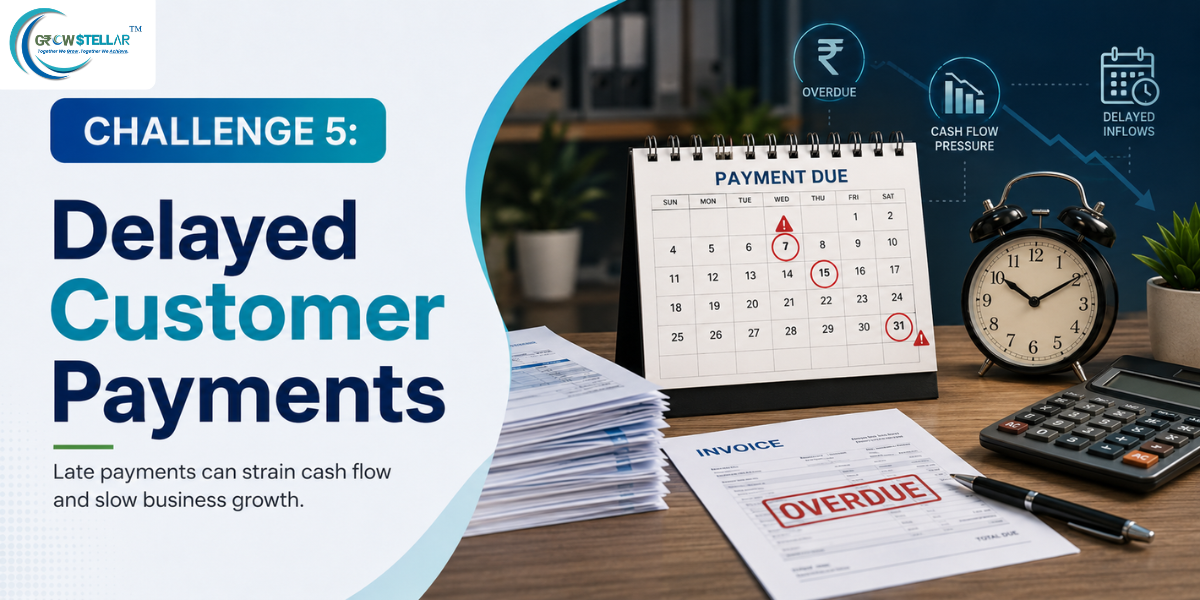
Challenge 5: Delayed Customer Payments
A business can appear profitable on paper and still struggle because customer invoices remain unpaid.
The Reserve Bank of India describes TReDS as an electronic platform that facilitates the financing or discounting of MSME trade receivables. It may help eligible businesses access funds against invoices from participating buyers, but costs and terms should be reviewed carefully.
To manage receivables:
-
Agree on payment terms before accepting an order
-
Raise accurate invoices quickly
-
Send reminders before the due date
-
Monitor customer-wise outstanding amounts
-
Limit dependence on one major buyer
Strong sales matter only when they turn into cash within a manageable period.
Opportunities Created by Economic Change
Economic change is not always negative. It can create new customer needs, weaken outdated business models, and increase demand for affordable or efficient solutions.
Rising import costs may encourage domestic alternatives, while larger companies may outsource specialised work to SMEs. Digital channels can also open wider markets.
The World Bank notes that digitisation can help address some barriers SMEs face in accessing finance. Digital tools can also improve billing, accounting, customer communication, and visibility, although financial products must still be evaluated responsibly.
Potential opportunities include:
-
Developing value-focused products
-
Entering underserved markets
-
Selling through digital channels
-
Offering domestic alternatives to imports
-
Partnering with larger companies
-
Automating repetitive work
New opportunities should be tested through small pilots before major investment.
Strategies for Sustainable SME Growth
1. Build a Rolling Cash-Flow Forecast
Estimate expected collections, salaries, supplier payments, taxes, EMIs, and operating expenses for the coming weeks or months.
A useful forecast can reveal:
-
Possible cash shortages
-
Payments requiring preparation
-
Customers needing faster follow-up
-
Whether borrowing is truly necessary
Update it with actual figures rather than treating it as a one-time exercise.
2. Protect Profit, Not Just Sales
Higher revenue does not always mean a healthier business. Some products may sell well but offer weak margins or create heavy servicing costs.
Track profitability by product, customer, and sales channel. Redesign or stop activities that consume cash without providing an adequate return.
3. Diversify Carefully
Reducing dependence on one customer, supplier, or market can make the business stronger. However, expanding into too many areas can weaken focus.
Choose opportunities that use existing skills, equipment, relationships, or distribution channels. Expansion should be supported by evidence of demand and a realistic budget.
4. Use Technology With a Purpose
Technology should solve a clear problem. Start with tools that improve invoicing, inventory control, accounting, customer follow-up, or decision-making.
Avoid purchasing expensive systems simply because they are popular.
5. Maintain a Financial Buffer
A reserve can help manage delayed payments, temporary demand weakness, or unexpected repairs. The right amount depends on the business model and operating risk.
Build it gradually and keep it separate from money already committed to salaries, taxes, or suppliers.
Final Thoughts
Economic changes can challenge an SME’s margins, demand, cash flow, supply chain, and borrowing capacity. They can also create space for flexible businesses to find new customers and improve operations.
The right response is not panic, uncontrolled cost-cutting, or unnecessary borrowing. It is preparation: monitor cash flow, understand margins, manage receivables, diversify key relationships, and invest carefully.
SMEs cannot control the economy. They can control how quickly they recognise change and how thoughtfully they respond—and that adaptability can become a powerful competitive advantage.