
A business may have rising sales and ambitious plans—and still struggle to secure finance because of its credit profile.
Your business credit score or rank helps lenders understand how responsibly your company has handled credit. It may influence a loan decision, but lenders can also assess cash flow, turnover, profitability, existing debt and business vintage.
There is no instant repair formula, but timely payments, controlled borrowing and accurate records can gradually strengthen a weak profile.

What Is a Business Credit Score?
A business credit report records your company’s borrowing and repayment behaviour, including loans, limits, outstanding balances, overdue payments and lender enquiries.
Different credit bureaus use different scoring systems. TransUnion CIBIL, for example, provides a Company Credit Report and a CIBIL Rank from 1 to 10 for eligible commercial borrowers, with 1 representing the strongest rank. CRIF High Mark uses its own commercial score or rank. Numbers from different bureaus should not be compared as though they follow the same scale.
A business credit report may show:
Current and past credit facilities
Sanctioned limits and outstanding balances
Repayment history and overdue amounts
Account status and recent lender enquiries
Why Does Your Business Credit Profile Matter?
A healthy credit profile can make your company appear more dependable when applying for working capital, equipment finance, a term loan or another business credit facility. It can also help you identify problems before funding becomes urgent.
A favourable rank does not guarantee loan approval or particular terms. Lenders may also consider your repayment capacity and previous credit behaviour when reviewing an application.
A stronger business credit profile may help you:
Present a more reliable borrowing history
Prepare better before approaching lenders
Spot incorrect information early
Build long-term financial credibility
1. Review Your Business Credit Report
You cannot improve a credit profile without knowing what it contains. Obtain your company credit report from a recognised credit bureau and review it carefully.
Check the company details, credit accounts, sanctioned limits, outstanding balances and repayment history. Look for unfamiliar facilities, duplicate entries, incorrect overdue amounts or closed loans that are still shown as active.
Use this quick review checklist:
Match every account with your internal records
Compare balances with recent lender statements
Confirm that closed loans are correctly reported
Review and recognise recent lender enquiries
Regular monitoring is particularly useful before submitting a fresh loan application. Both CIBIL and CRIF describe business reports as tools for understanding credit history and preparing for financing decisions.

2. Pay Every EMI and Due on Time
Repayment behaviour is a major part of a commercial credit profile. CIBIL identifies past repayment behaviour as one of the main parameters used to calculate its business rank.
Repeated delays can create an unfavourable repayment pattern. Do not depend entirely on memory or start arranging funds on the payment date itself.
Build a simple payment system:
Maintain a calendar for every EMI and due date
Keep sufficient funds ready before auto-debit dates
Set reminders several days before payments
Confirm that every scheduled debit was successful
When cash-flow pressure is expected, speak with the lender before the payment becomes overdue. Early communication does not guarantee revised terms, but it is better than ignoring the problem.
3. Keep Credit Utilisation Manageable
Credit utilisation is the share of an available revolving credit limit that your business is currently using.
A company that continuously operates near the maximum limit of its overdraft, cash-credit facility or business credit card may appear heavily dependent on borrowed funds.
No universal utilisation percentage guarantees a stronger business credit score. A practical approach is to maintain reasonable headroom instead of treating the full sanctioned limit as everyday working capital.
To lower excessive utilisation:
Follow up on overdue customer invoices
Avoid unnecessary inventory build-up
Repay revolving balances when surplus cash is available
Use suitable long-term finance for long-term assets
CIBIL lists credit utilisation, together with repayment behaviour, among the major parameters used for its commercial rank.

4. Avoid Multiple Loan Applications
A lender may make an enquiry on your company’s credit report when assessing a formal application. Several enquiries within a short period may suggest that the business is urgently seeking credit.
Comparing loan options is sensible, but submitting formal applications everywhere is not. Research eligibility, documentation, costs and product suitability before authorising a credit check.
Before applying:
Define the exact amount your business requires
Clearly identify the purpose of the loan
Shortlist lenders that suit your business profile
Confirm basic eligibility before applying
Maintain a record of every application
This approach cannot guarantee approval, but it can reduce avoidable enquiries and keep your borrowing strategy organised.
5. Reduce Unnecessary Outstanding Debt
Borrowing is not automatically harmful. A well-planned loan can help a company purchase equipment, expand operations, manage seasonal demand or maintain working capital.
Problems begin when repayments become too large for the cash generated by the business.
Review whether every active credit facility still serves a productive purpose. Expensive or underused credit may require attention, while debt supporting a useful business asset may remain reasonable.
Focus on these actions:
Clear overdue amounts before taking fresh debt
Reduce expensive outstanding balances where practical
Avoid repeatedly using one short-term loan to repay another
Keep repayments aligned with expected business cash flow
Do not reduce debt so aggressively that the company is left without the working capital required for normal operations.

6. Choose the Right Credit Product
Using short-term credit for a long-term requirement can create unnecessary repayment pressure.
For example, machinery that will generate value for several years may be better suited to an appropriate term loan than a revolving credit facility requiring frequent repayment.
Before borrowing, ask:
What exactly will the money be used for?
How long will the funds be required?
Will the borrowing generate or protect cash flow?
Can the business manage the total repayment cost?
Does the repayment schedule match the revenue cycle?
Do not open additional facilities simply to create a more varied “credit mix.” Every loan or credit facility should solve a genuine business requirement.

7. Separate Personal and Business Finances
Mixing personal and company transactions can hide the business’s true financial position. It may also create confusion when a lender reviews bank statements, expenses and cash flow.
Maintain a clear separation by:
Using a dedicated business bank account
Paying company expenses through business channels
Recording promoter contributions properly
Avoiding personal purchases through business credit
Maintaining invoices and expense records
For certain business loans, lenders may also evaluate promoters or guarantors. Good financial discipline should therefore extend to everyone responsible for the borrowing.
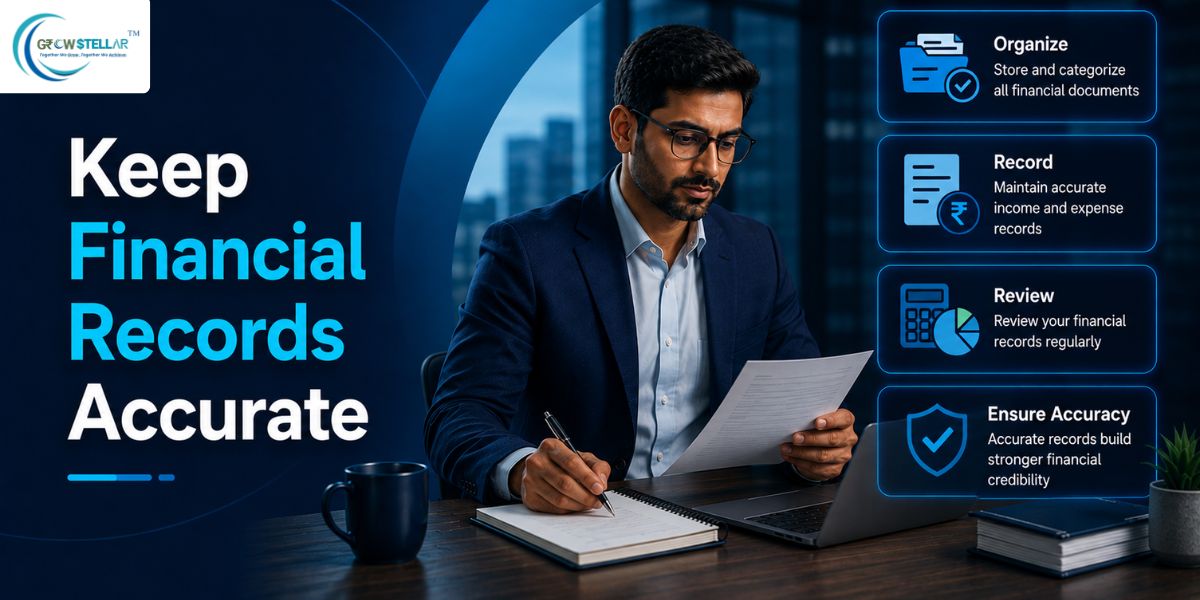
8. Keep Financial Records Accurate
Your credit report tells only part of the story. Lenders may also examine financial statements, bank statements, GST filings, income-tax returns, debt schedules and cash-flow information.
Inconsistent figures can delay an assessment or raise questions about the reliability of the information provided.
Well-organised records do not guarantee finance, but they help a lender understand the business more clearly.
Keep the following updated:
Profit-and-loss statements and balance sheets
Tax and applicable statutory filings
Loan statements and repayment schedules
Sanction letters and loan agreements
Invoices, receipts and closure documents
Reconcile loan balances regularly so that your internal accounts match the information provided by lenders.
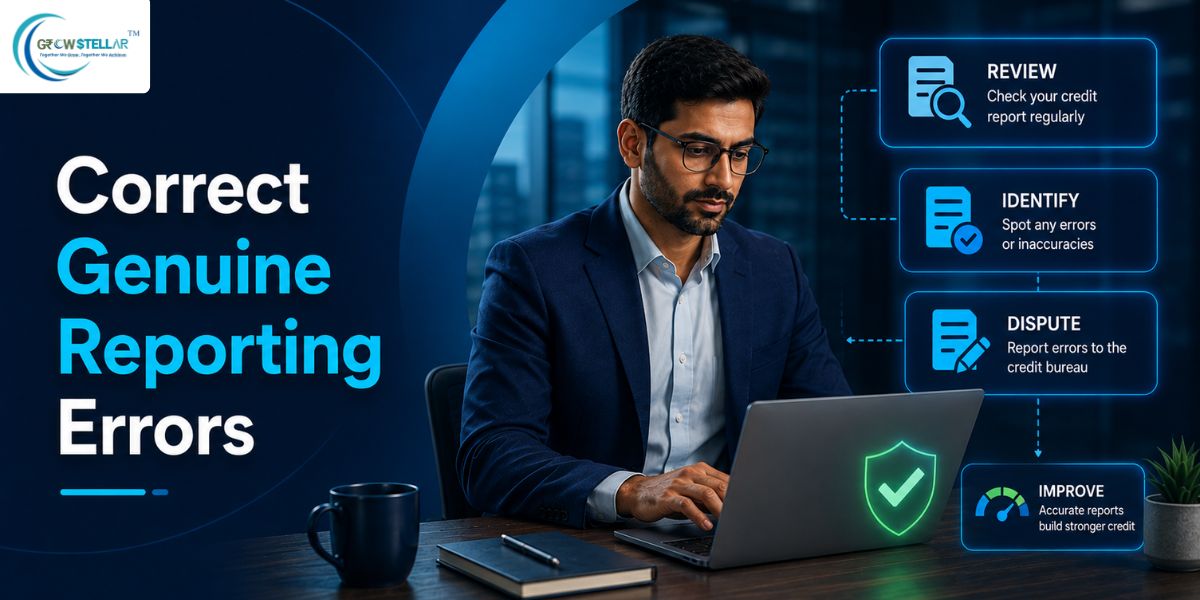
9. Correct Genuine Reporting Errors
Incorrect information can weaken a company’s credit profile unfairly.
When an unfamiliar account appears, an outstanding balance is incorrect or a closed loan remains active, raise a dispute through the credit bureau’s official process.
CIBIL allows commercial entities to dispute inaccuracies in their Company Credit Report without charging for its dispute service. Changes generally require verification from the financial institution that reported the information.
Keep supporting documents such as:
Payment receipts and bank statements
Loan closure or no-dues letters
Emails exchanged with the lender
Sanction and repayment documents
Dispute acknowledgements and reference numbers
Do not dispute accurate negative information simply because it affects the rank. The dispute process is intended to correct incorrect or incomplete information—not remove genuine repayment history.

10. Build Credit Gradually
A new business may have little or no reported credit history.
CRIF explains that a blank business credit report can be generated when no credit-facility or enquiry information is available. In that situation, a business score or rank may not be produced.
Do not take a large loan only to create a credit history. Borrow when there is a genuine business requirement and when the repayments are comfortably manageable.
Build a healthier credit profile by:
Taking only necessary and affordable credit
Paying every obligation according to schedule
Monitoring business credit reports periodically
Keeping financial records accurate
Planning finance before an urgent requirement arises
How Long Does Credit Improvement Take?
There is no fixed timeline for improving a business credit score.
The time required depends on previous payment delays, outstanding debt, reporting cycles, recent enquiries, disputed information and the scoring model used by the credit bureau.
An incorrect entry may be corrected after verification, while repeated late payments can take much longer to overcome.
Be cautious of any agency promising a guaranteed score increase within a few days. Accurate negative information cannot legitimately be erased, and no service provider can guarantee how a lender will respond to your application.
Common Mistakes to Avoid
Even a growing business can weaken its credit profile by making avoidable financial mistakes.
Watch out for:
Missing small payments because they appear unimportant
Using the full credit limit continuously
Applying to several lenders in panic
Ignoring errors until finance is urgently needed
Closing a loan without collecting documentary proof
Mixing personal and business expenses
Taking fresh debt without checking repayment capacity
Assuming that a favourable rank guarantees approval
Final Thoughts
A strong business credit score is not built through tricks or shortcuts. It develops through reliable payments, sensible borrowing, manageable credit utilisation and accurate financial records.
Start by reviewing your company credit report. Correct genuine mistakes, organise payment dates, reduce avoidable debt and ensure that every new credit facility has a clear business purpose.
Improvement may be gradual, but the benefits extend beyond loan applications. Better credit discipline can also improve cash-flow visibility, financial planning and confidence in the way your business grows.