
Loan Rejection Reasons are not limited to a poor credit score. An application may also fail because the requested amount is too high, existing EMIs are heavy, income is difficult to verify, documents do not match, or the applicant falls outside a lender’s internal policy.
A rejection can be frustrating, but applying to several lenders immediately may create more enquiries without correcting the real problem. The better response is to identify the weakness, improve it, and reapply only when ready.
This guide explains ten common Loan Rejection Reasons and practical ways to address them. Approval cannot be guaranteed because each lender follows its own eligibility and risk rules.
What Do Lenders Check?
Lenders assess whether an applicant appears willing and able to repay. They may examine the credit report, income, bank statements, existing obligations, requested amount, employment or business stability, and collateral.
A strong credit score can support an application, but it does not automatically secure approval. CIBIL notes that lenders also examine other details.
Before applying, confirm that:
You meet the lender’s basic eligibility conditions.
The proposed EMI fits your monthly cash flow.
Your credit report contains no unexpected errors.
Your documents are current, complete, and consistent.
The requested amount matches your genuine requirement.
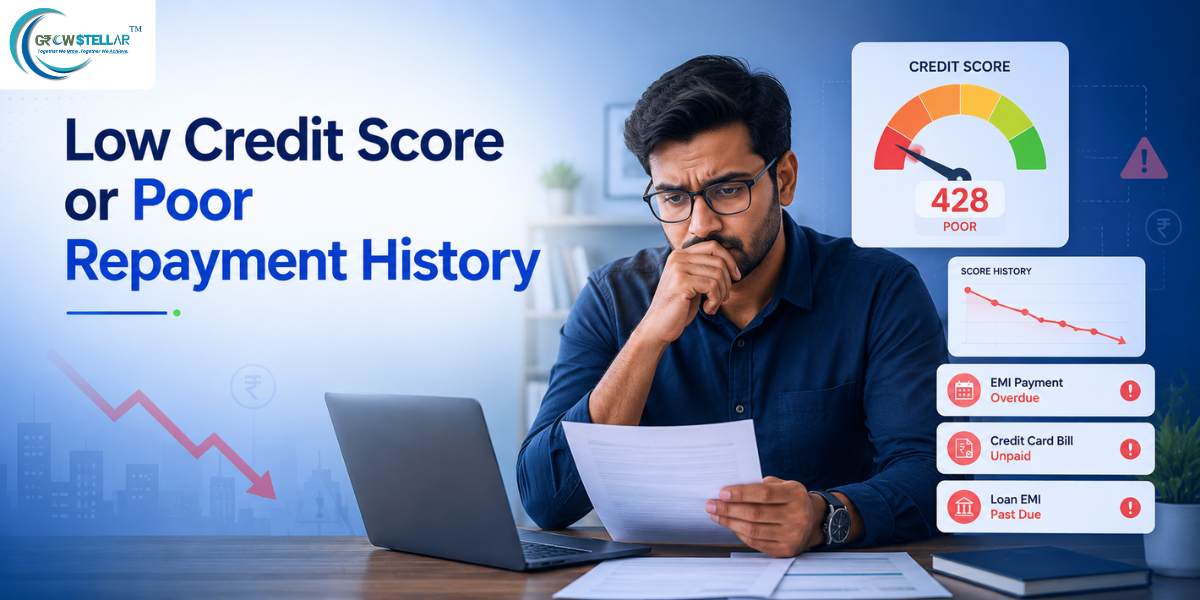
1. Low Credit Score or Poor Repayment History
One of the most common Loan Rejection Reasons is a weak credit profile. Missed EMIs, delayed card payments, defaults, settled accounts, or repeated delinquencies may signal higher repayment risk. CIBIL states that late or missed payments can negatively affect a score.
What can help?
Check your credit report before applying.
Clear overdue amounts and pay future dues on time.
Review balances, account status, and enquiries.
Dispute information only when it is genuinely incorrect.
Avoid anyone promising to erase accurate negative records instantly.
Credit improvement usually requires consistent behaviour. Clearing an overdue bill does not guarantee an immediate score increase or approval.
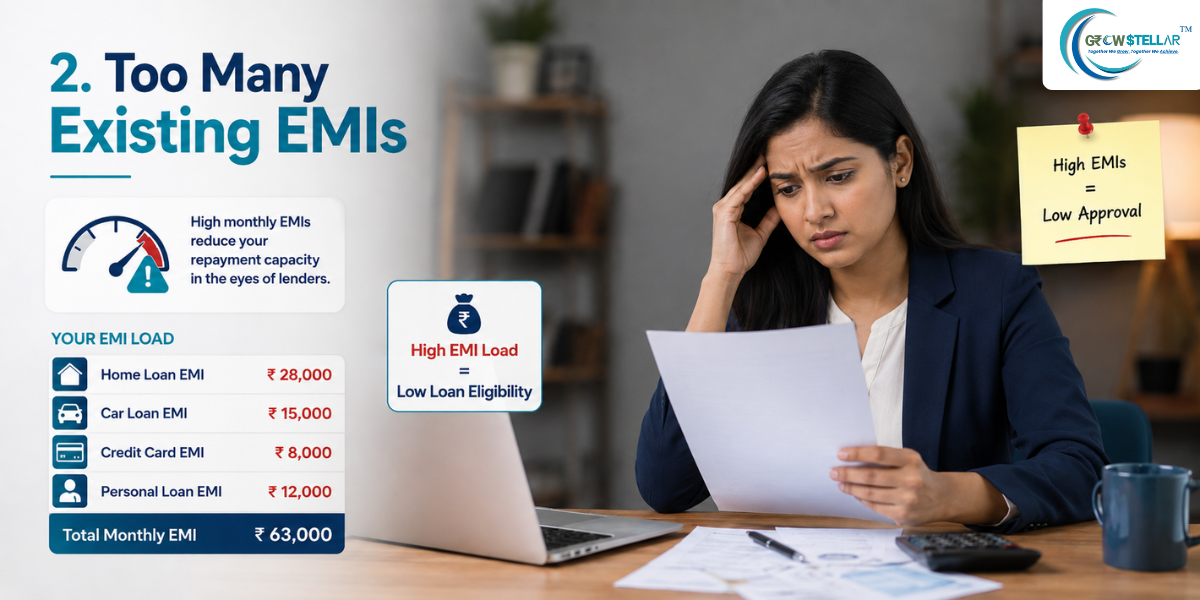
2. Too Many Existing EMIs
Lenders consider not only what you earn but also how much of that income is already committed. Personal loans, card balances, vehicle loans, and other obligations can leave limited room for another EMI.
Even a well-paid applicant may be declined when another EMI appears difficult after existing liabilities.
Improve your position by:
Listing every monthly EMI before choosing a loan amount.
Reducing costly revolving balances where practical.
Avoiding new debt to support recurring overspending.
Considering a smaller amount after checking your actual need.
Including only genuine, verifiable income.
A co-applicant is not an automatic solution; their finances may also be assessed.

3. Income Is Low, Irregular, or Unverifiable
A lender may hesitate when income falls below its criteria, changes sharply, or cannot be verified reliably.
Self-employed applicants may face difficulty when deposits, tax returns, invoices, and declared earnings are inconsistent.
Keep these records ready:
Recent salary slips or business income statements
Bank statements showing regular income credits
Income-tax returns and financial statements, where applicable
Invoices, contracts, or proof of continuing work
Evidence for any additional income included
Never inflate earnings or submit edited documents. Inconsistencies can cause rejection and may have more serious consequences.

4. Incomplete or Mismatched Documents
Even an eligible applicant may be rejected because of a missing signature, expired proof, unreadable scan, incorrect address, or name mismatch.
CIBIL lists identity, address, income, employment, and bank records among common documents, while noting that requirements vary.
Before submitting:
Use consistent name spelling across all records.
Support your current address with an accepted document.
Upload readable and complete copies.
Recheck account numbers, dates, and income figures.
Provide every product-specific document requested.
An organised file prevents a suitable profile from being weakened by paperwork errors.
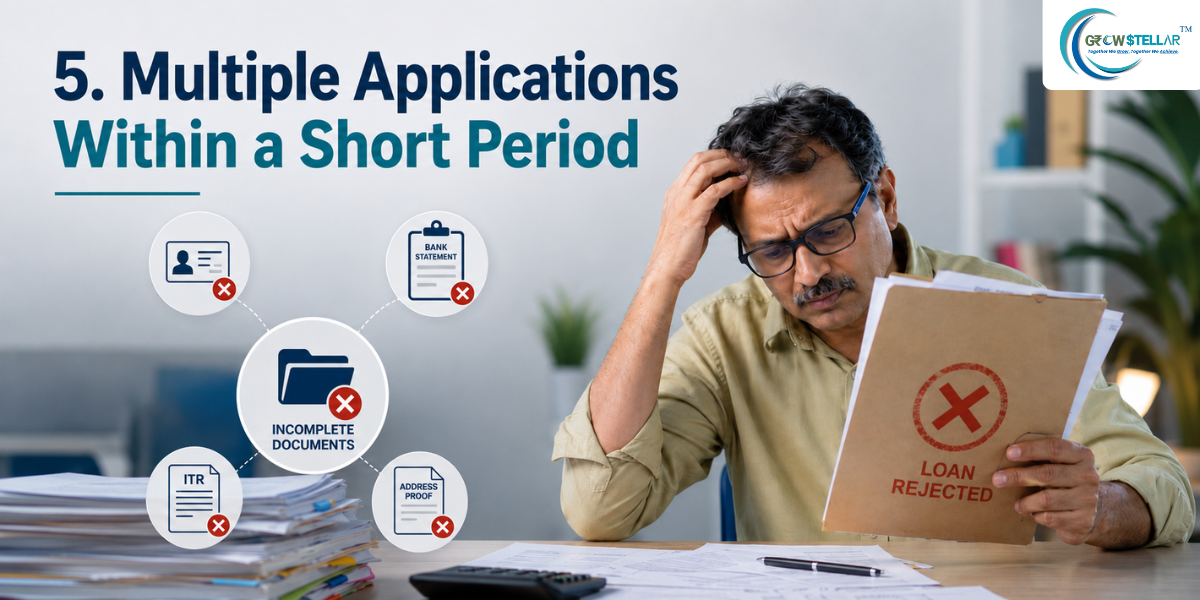
5. Multiple Applications Within a Short Period
Each formal application may create a credit enquiry. CIBIL notes that frequent applications can negatively affect the score and suggest growing debt dependence.
Repeated applications are among the most preventable Loan Rejection Reasons because they do not fix the original issue.
A safer response is to:
Ask the lender which Loan Rejection Reasons affected you.
Compare eligibility before another formal application.
Check whether an online eligibility tool creates an enquiry.
Correct income, documentation, or repayment issues first.
Apply selectively to an appropriate regulated lender.
RBI fair-practices guidance says banks should communicate the main reasons that led to loan rejection.
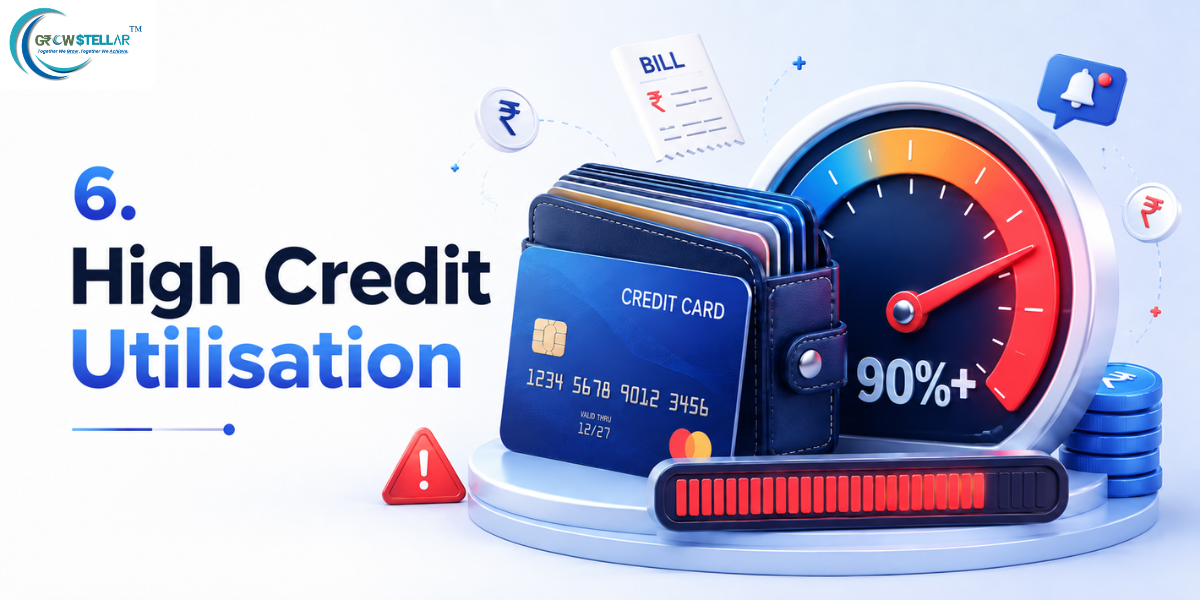
6. High Credit Utilisation
Credit utilisation is the share of a revolving limit being used. Balances close to the limit can suggest financial pressure.
CIBIL identifies utilisation as an important credit-profile factor.
Manage utilisation by:
Paying down balances when your budget allows.
Avoiding the use of a card limit as extra income.
Making purchases within a realistic repayment plan.
Checking for incorrectly reported balances or limits.
Avoiding unnecessary cards solely to influence utilisation.
No single percentage guarantees approval. Lenders consider the complete application rather than one ratio alone.
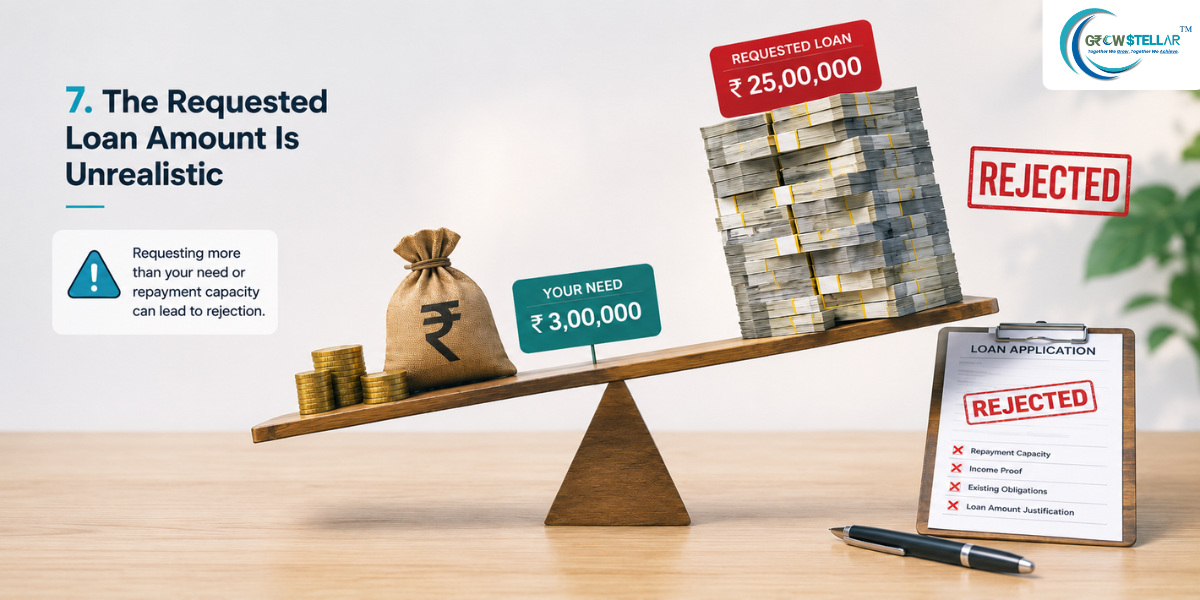
7. The Requested Loan Amount Is Unrealistic
An advertised maximum is not available to every applicant. Asking for more than your income, cash flow, or collateral can support may lead to rejection.
Focus on what you can repay, not only what you want.
Make a realistic request by:
Calculating the exact amount required.
Comparing the EMI with your monthly surplus.
Including disclosed fees and charges in the budget.
Protecting essential savings while planning a down payment.
Choosing a loan designed for the intended purpose.
Assess the amount, rate, tenure, EMI, and total repayment together; a longer tenure may increase total interest.
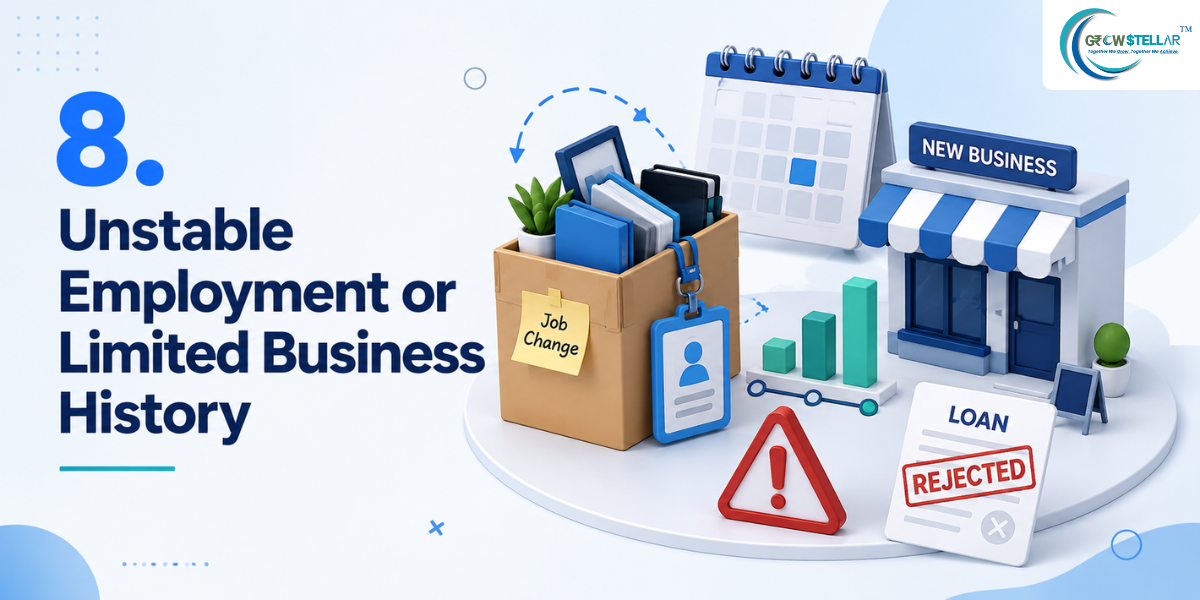
8. Unstable Employment or Limited Business History
Frequent job changes, probation, income gaps, or a new business can make future earnings harder to assess. Lenders may require minimum employment or business continuity.
New employees, freelancers, and entrepreneurs are not automatically rejected, but may need stronger evidence or a different product.
Improve readiness by:
Meeting the lender’s continuity requirement before applying.
Keeping contracts, offer letters, or client agreements.
Maintaining regular bank and tax records.
Explaining genuine employment or income gaps.
Selecting products suited to your work profile.
Transparent information is safer than hiding a change that may be discovered during verification.
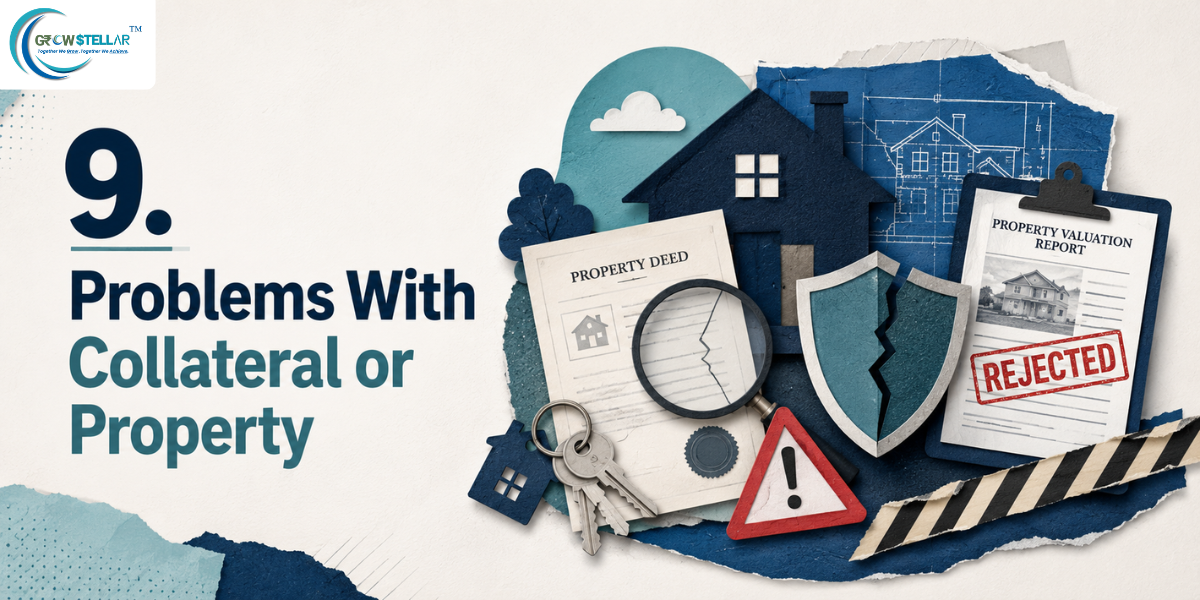
9. Problems With Collateral or Property
For secured loans, the lender assesses both borrower and asset. Ownership gaps, disputes, existing charges, unauthorised construction, or valuation issues can stop approval.
A lender’s valuation may also be lower than the owner expects.
Before applying:
Collect complete ownership and title documents.
Disclose existing mortgages, claims, or disputes.
Resolve documentation gaps where legally possible.
Keep tax receipts and required approvals available.
Expect independent legal and valuation checks.
Final asset acceptability depends on the lender’s checks and policy.
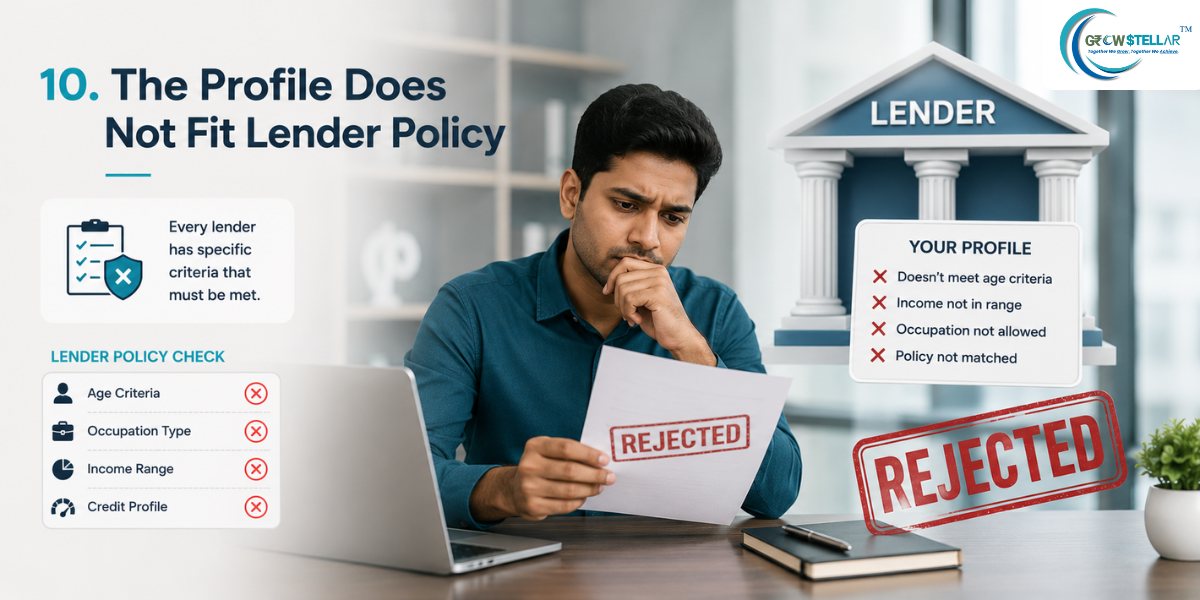
10. The Profile Does Not Fit Lender Policy
An application can be declined when the applicant’s location, employer, age at maturity, industry, property, business segment, or loan size falls outside policy.
Different lenders may therefore make different decisions. One rejection does not mean permanent ineligibility.
The practical response is to:
Request the specific reason instead of guessing.
Review the product’s eligibility rules carefully.
Correct genuine errors before applying elsewhere.
Approach lenders whose products match your profile.
Avoid unregulated agents offering guaranteed approval.
Among the Loan Rejection Reasons, policy mismatch may require a better product match rather than a major financial change.
What to Do After a Loan Rejection
Do not immediately submit several new applications. Pause and examine the full profile.
Follow these steps:
Obtain the lender’s reason for rejection.
Review your credit report and recent enquiries.
Check existing EMIs, balances, and overdue payments.
Correct incomplete or inconsistent documents.
Recalculate an affordable amount and EMI.
Wait until meaningful weaknesses have been addressed.
Reapply selectively with accurate information.
For credit-report errors, use the bureau’s official dispute process. Lender confirmation is generally needed before reported data changes.
When Should You Reapply?
There is no universal waiting period after rejection. Reapply when the weakness has genuinely changed—not simply after a few days. A documentation error may be corrected quickly, while high debt, overdue payments, or limited income history may require months of disciplined action. Meanwhile, avoid unnecessary applications, continue timely repayments, and preserve proof of improvement. The right time is when your updated profile can present materially stronger information to the next lender for assessment.
Final Pre-Application Checklist
Understanding Loan Rejection Reasons helps, but preparation is better than repair.
Before applying:
Check your credit report early.
Pay every current obligation on time.
Keep revolving balances manageable.
Select a realistic amount and suitable product.
Prepare complete KYC, income, employment, and asset records.
Disclose liabilities honestly.
Avoid repeated formal applications.
Read the rate, fees, tenure, security, and repayment conditions.
Final Thoughts
Loan Rejection Reasons usually involve credit behaviour, repayment capacity, documentation, product suitability, collateral, or lender policy. There is no guaranteed-approval shortcut; identify the weakness and improve it responsibly.
A strong score helps, but stable income, manageable debt, accurate records, and honest disclosure also matter.
Review your profile, borrow only what you can reasonably repay, and choose a regulated lender whose product fits your need. These steps cannot promise approval, but they can strengthen your application.
Frequently Asked Questions
1. What are the most common loan rejection reasons?
Common loan rejection reasons include a low credit score, delayed repayments, high existing EMIs, insufficient or unverifiable income, incomplete documents, multiple recent loan applications, and failure to meet the lender’s eligibility criteria.
2. Does a low credit score always lead to loan rejection?
No. A low credit score may reduce the chances of approval, but lenders also review income, repayment capacity, employment or business stability, existing liabilities, and the requested loan amount. Each lender follows its own assessment policy.
3. Can I apply for a loan immediately after rejection?
You can apply again, but submitting another application immediately may not help if the original issue remains unresolved. First ask for the rejection reason, check your credit report, correct documentation errors, reduce outstanding debt where possible, and reapply when your profile has improved.
4. Do multiple loan applications affect my credit score?
Several formal loan applications within a short period can result in multiple credit enquiries. This may make an applicant appear highly dependent on credit and could negatively affect the overall credit profile. It is better to compare eligibility before applying selectively.
5. Can incorrect information in my credit report cause loan rejection?
Yes. Incorrect overdue amounts, unfamiliar accounts, duplicate entries, or loans incorrectly shown as active may affect a lender’s decision. Review your credit report regularly and raise a dispute through the credit bureau’s official process if you find genuine errors.
6. How can I improve my chances of loan approval?
Maintain timely repayments, keep existing debt manageable, review your credit report, submit complete and accurate documents, choose a realistic loan amount, and apply for a product that matches your income and profile. These steps may strengthen an application, but they cannot guarantee approval.