Did your loan just get approved? Questioning what comes next and what all those documents mean?
Getting a loan approved feels great. But right after that, most people get confused. They receive papers from the bank and don’t know what to do.
One of the most important papers you get is the loan sanction letter. Many people mix it up with the final loan amount hitting their account But these are two different things.
This blog will help you understand what this letter is, what it contains, and what steps come after you get it. We’ll keep it simple and easy to follow, so you always know where you stand.
What Is a Loan Sanction Letter?
This is an official document that your bank or lender sends you after they agree to give you a loan.
It tells you that your application has been checked and accepted. However, getting this letter does not mean the money is in your account yet.
Think of it as the bank’s written promise to give you the loan. The letter confirms the loan amount, the interest rate, and the repayment period.
It is part of the loan approval process and comes before the actual money transfer. You must read it carefully and sign it to move forward.
What Does a Loan Sanction Letter Contain?
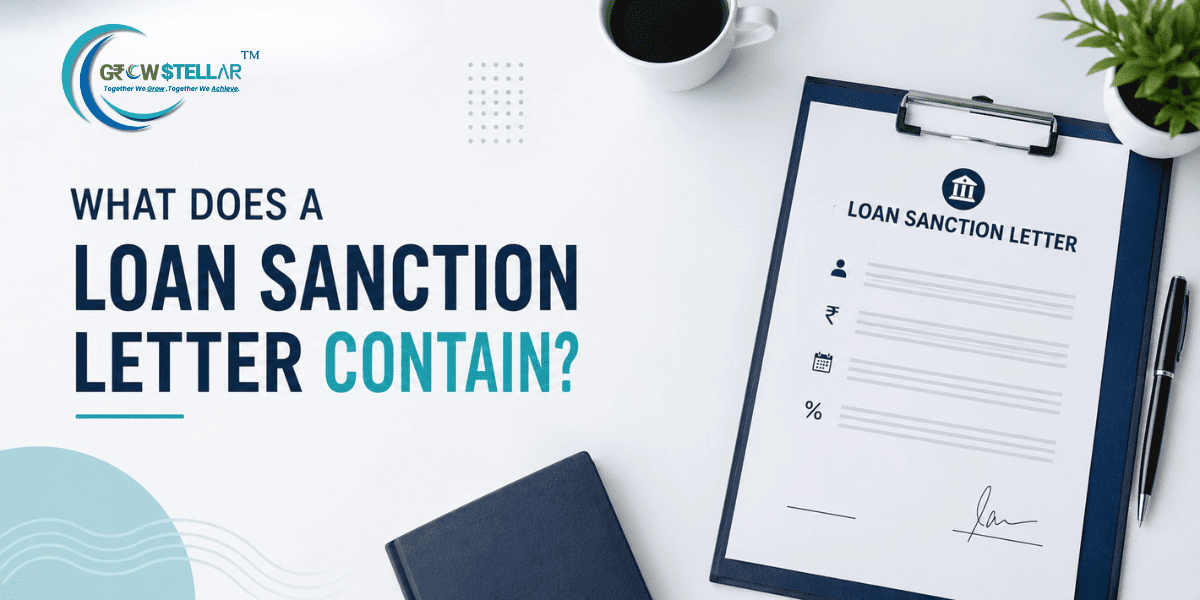
Here is a quick look at all the key details you will find in the letter:
- Loan Amount: The exact amount the bank has agreed to lend you.
- Interest Rate: Whether it is fixed or floating, and the percentage.
- Loan Tenure: How many months or years you have to repay the loan.
- EMI Details: The monthly payment amount you will need to pay.
- Processing Fees: Any one-time fee the bank charges for processing your application.
- Terms and Conditions: Rules you must follow to keep the loan active.
- Validity Period: The date by which you must accept the offer.
- Prepayment Rules: Whether you can pay off the loan early and any charges for it.
Loan Sanction Letter vs Loan Disbursal
| Loan Sanction Letter | Loan Disbursal |
|---|---|
| Bank approves your loan application | Bank transfers the actual money to you |
| You receive a written document | You receive the funds in your account |
| Comes before money is released | Happens after all documents are verified |
| You need to sign and accept it | No action needed; money arrives directly |
| Does not confirm money transfer | Confirms that the loan amount is now active |
| Valid for a limited time period | Marks the start of your repayment period |
| Part of loan approval process | Final step of the loan disbursement process |
What Is Loan Disbursal?
Loan disbursal is when the bank actually sends you the money. It happens after you accept the sanction letter and submit all required documents.
For home loans, the money may go directly to the builder or seller. For personal loans, it usually goes into your bank account.
The loan disbursement process starts only after the bank verifies everything. This includes your property documents, identity proof, and income records.
Once the bank is satisfied, they release the funds. The timeline can vary from a few hours to several days depending on the type of loan and the lender.
Loan Approval Process: Step-by-Step
Understand the loan approval process step by step, from application and verification to approval and final disbursement.
Step 1: Submit Your Loan Application
You fill out the loan form and attach all required documents. This includes your ID proof, income proof, bank statements, and photographs.
The bank checks if your application is complete before sending it for further review.
Step 2: Credit and Background Check
The bank checks your credit score, repayment history, and existing debts. They also verify your employment and income details.
A good credit score speeds up approval. If your score is low, the bank may ask for more documents or reject the loan.
Step 3: Loan Assessment and Offer
Based on your profile, the bank decides how much loan to approve and at what interest rate. They prepare the loan sanction letter with all the terms.
This is where the sanction letter meaning becomes clear – it is the bank’s formal decision on your loan.
Step 4: Document Verification and Disbursal
You sign the letter and submit remaining documents. The bank does a final check on everything, including property valuation for secured loans.
Once cleared, they release the loan amount to you or the concerned party.
What Happens After You Receive a Loan Sanction Letter?
After you get the letter, you must read every line carefully. Check the loan amount, interest rate, EMI, and terms.
If something looks wrong, contact your bank immediately. If everything is correct, sign the letter and return it within the given validity period.
Next, collect and submit any additional documents the bank asks for. These may include property papers, insurance documents, or updated income proof.
Once the bank gets everything, they will process your file for the final step. Remember, the letter expires if you don’t act within the stated timeframe.
How Long Does Loan Disbursal Take After Sanction?